

National Day of Racial Healing
“As a sacred practice, story sharing highlights history, preserves language, engages culture, offers wisdom, sustains survival and teaches lessons that foster connection.”
On January 20th, our nation observed the National Day of Racial Healing—a day specifically designed to follow Martin Luther King Jr. Day as a bridge from reflection to action. This year, the La Crosse Area Synod had a front-row seat to this holy work.
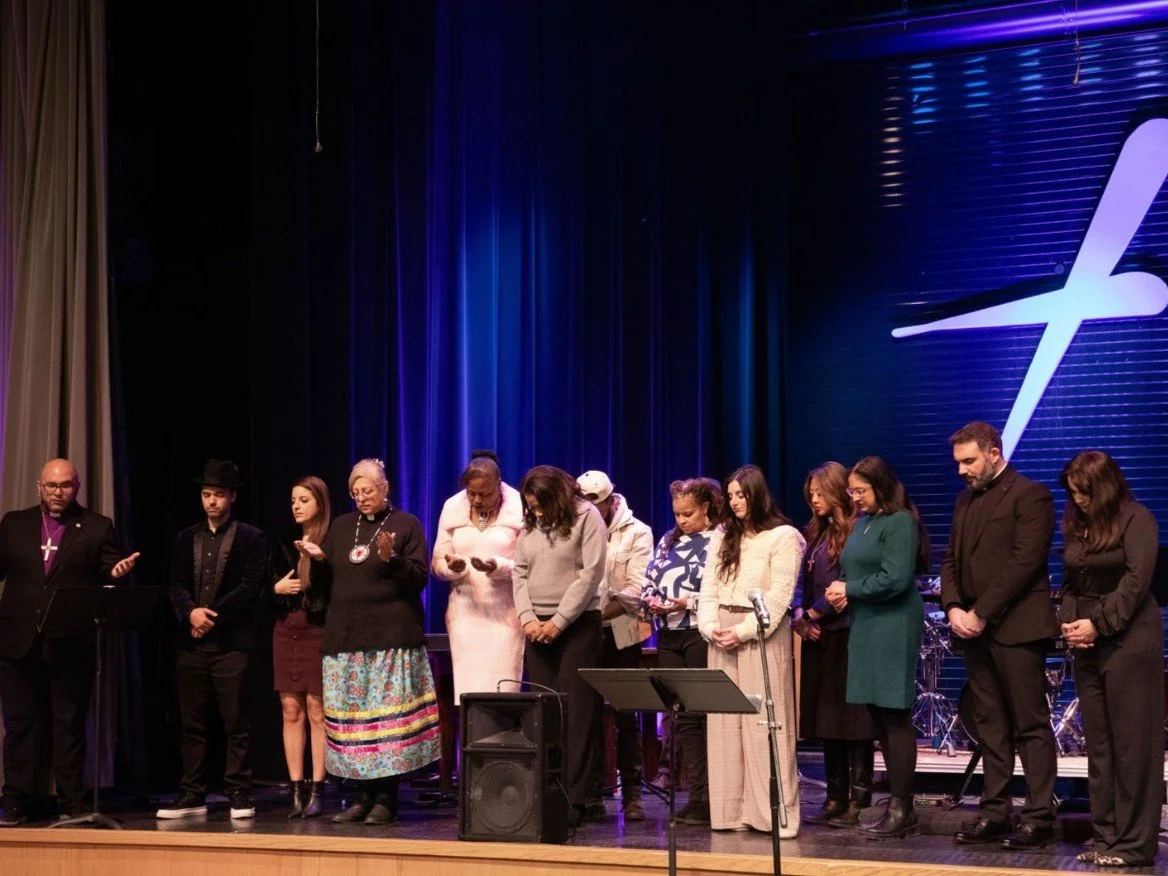
Our very own Bishop Felix Malpica had the honor of MCing the ELCA’s national event, “Just Us Narratives: A Night of Centering Multiracial Voices.” It was a night that reminded us that while racism is a systemic sin, healing often begins at the level of the individual—through the simple, radical act of listening.
The Power of the Narrative
The theme, "Just Us Narratives," was a play on words that struck deep. Often, when we talk about racial justice, we get lost in abstract concepts or political debates. But as Bishop Malpica grounded us in prayer, the evening shifted from "theory" to "humanity."
We listened to stories like Rev. Wanda Frenchman’s "Lakota, Lenape and Lutheran" and Taína Rodríguez Encarnación’s "I Clap on the 2." We heard about survival, about the "nosebleed seats" of society, and about the "Holy Pause" we all need to take to truly see the person standing in front of us.
When we take the time to hear someone’s story, we stop seeing them as a statistic or a "category." We see them as a child of God. As Lutherans, we believe we are one body; when one part of the body suffers, we all suffer. Listening is the first step in acknowledging that pain.
Why We Must Keep Moving
Healing is not a one-day event; it is a lifelong commitment. The statistics remind us why this work is so urgent:
In the United States, the racial wealth gap remains staggering, with the median white household holding roughly 6 to 9 times the assets of the median Black or Latino household.
In the healthcare sector, disparities persist; for instance, Black women are three times more likely to die from pregnancy-related causes than white women, regardless of income or education.
Even within our own pews, the ELCA remains one of the least racially diverse denominations in the U.S., with approximately 92% of our members identifying as white.
These numbers aren't just data points—they represent neighbors whose stories are often silenced by the systems we live in.
Our Call to Action
Bishop Malpica often reminds us that we are called to be a church that is "visibly, publically, and active in our love." So, where do we go from here?
Commit to Deep Listening: Seek out stories that are different from your own. Use the ELCA Reflection Worksheet to process what you heard during the National Day of Racial Healing.
Acknowledge the Truth: Healing cannot happen without truth-telling. Acknowledge the history of the land we stand on and the systemic barriers that still exist in our own communities here in the La Crosse area.
Move Toward Justice: Racial healing is the "heart work" that fuels the "hand work" of justice. Whether it’s advocating for policy changes, supporting local minority-owned businesses, or diversifying our leadership, let our prayers lead to footprints.
As we look back on this event, let us carry the songs and stories with us. Let us be a people who refuse to look away, who choose to see the individual, and who relentlessly pursue the day when "justice rolls down like waters."
Did you miss the event? You can watch the recording of “Just Us Narratives” on the ELCA YouTube channel to hear the powerful voices that Bishop Malpica helped introduce to our church.
About the National Day of Racial Healing
The NDORH follows Martin Luther King Jr. Day and is hosted by the W.K. Kellogg Foundation as part of its Truth, Racial Healing & Transformation efforts to raise awareness of the need for racial healing and encourage actions that build a more just and inclusive church and society.
Brought to you in Partnership with Augsburg Fortress
